Horse Coat Colour Genetics
Introduction
Horse coat colours are determined by three levels of genetics:
[NB: white spotting genes will not be discussed further here as they do not occur in RMH.]
Basic Colours – controlled by Extension (E) and Agouti (A).
Dilution/Modifier Genes – lighten or alter the base colour.
White Spotting Genes – create patterns (not permitted by RMH breed standard).
1. Base coat colours that occur in RMH
Dominant genes will express in the phenotype with only one copy of the allele. Recessive genes have to be homozygous (two copies) for their trait to be expressed, e.g., e/e for chestnut.
Extension (E locus) – recessive, controls black pigment production.
e/e → Chestnut (no black pigment)
Agouti (A locus) – dominant, controls distribution of black pigment.
A/- with E/- → Bay (brown body, black mane, tail, legs)
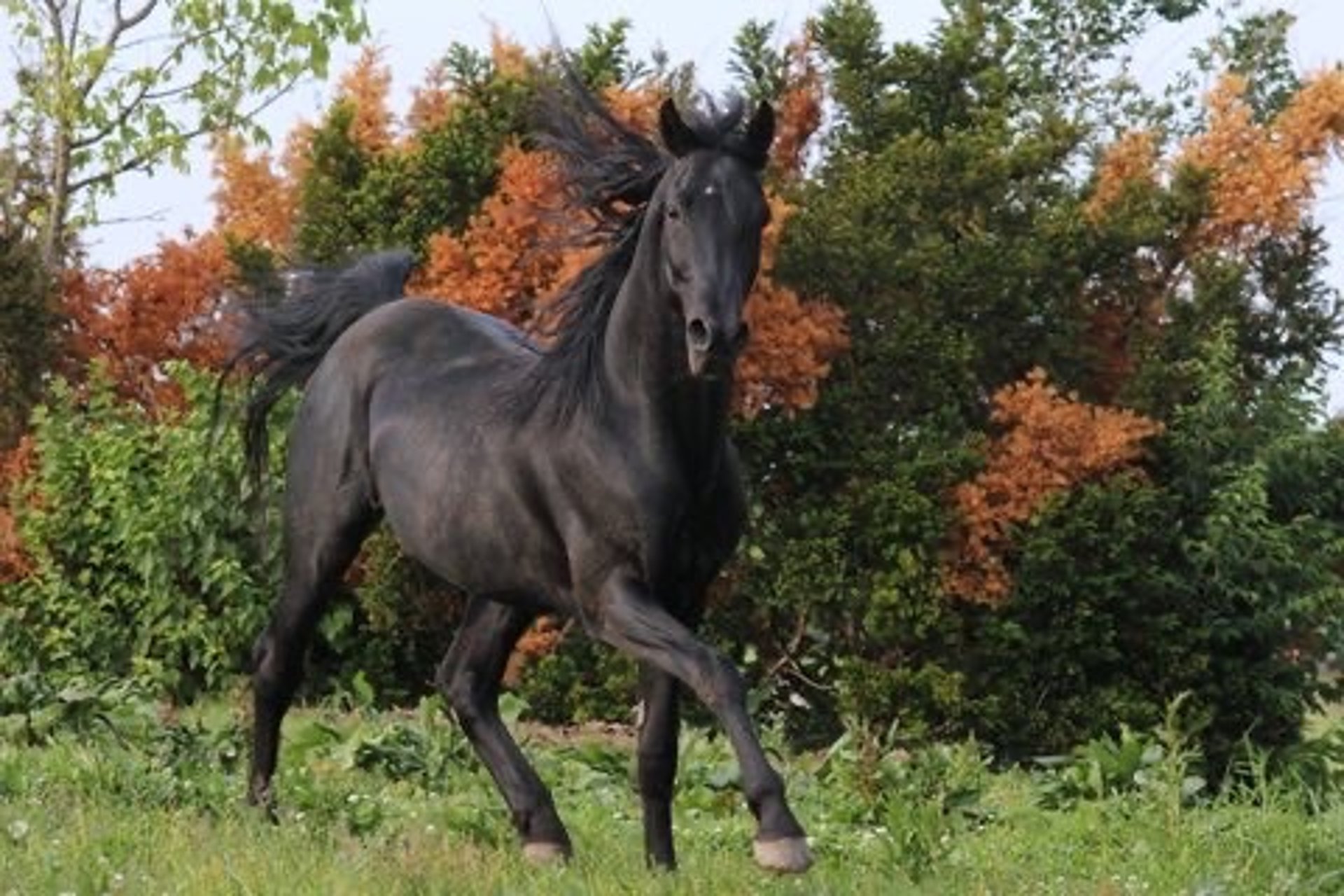
a/a with E/- → Black (full black coat)
2. Dilution and Modifier Genes that occur in RMH
Dilution genes lighten the base colours and modifier genes modify the expression of the genetic phenotypes. Most are dominant; meaning only one copy of the allelle is needed for the trait to express in the phenotype; there is no difference between hetero- or homozygous status. Incomplete dominance, the phenotype expression varies depending whether the horse is hetero- (one copy) or homozygous (two copies), e.g., cream.
Cream (Cr) – Incomplete dominance, cumulative dosage effect. Single copy lightens the red colour of the skin, hair and eyes and two copies lightens both the red and black colour.
Chestnut → Palomino (Cr/-) or Cremello (Cr/Cr)
Bay → Buckskin (Cr/-) or Perlino (Cr/Cr)
Black → Smokey Black (Cr/-) or Smokey Cream (Cr/Cr)
Champagne (Ch) – Dominant (Ch/-) or (Ch/Ch), dilutes hair pigment from black to brown and red to gold, rare
Chestnut → Gold Champagne
Bay → Amber Champagne
Black → Classic Champagne
Dun (D) – Dominant (D/-) or (D/D), dilutes body colour leaving the points, adds primitive markings (dorsal stripe, leg barring)
Chestnut → Red Dun
Bay → Bay Dun
Black → Grulla
Roan (Rn) – Dominant (Rn/-) or (Rn/Rn), mixes white hairs into body coat (not head/legs)
Chestnut → Red Roan
Bay → Bay Roan
Black → Blue Roan
Silver (Z) – Dominant (Z/-) or (Z/Z), dilutes black pigment
Chestnut → Carrier (no visible effect)
Bay → Bay Silver, mane and tail flaxen colour though this can darken with age
Black → Black Silver, mane and tail flaxen colour though this can darken with age
Gray (G) – · Dominant (G/-) or (G/G), horses born dark eventually lose pigment to become nearly all white
Any base colour → progressively whitens with age


Horse Colour Modifications (with Genotypes) Quick Reference Chart
The Transatlantic Rocky Mountain Horse Club
Promoting the Rocky Mountain Horse®
across Europe.
© 2025. All rights reserved.
Designed by clarity@2am